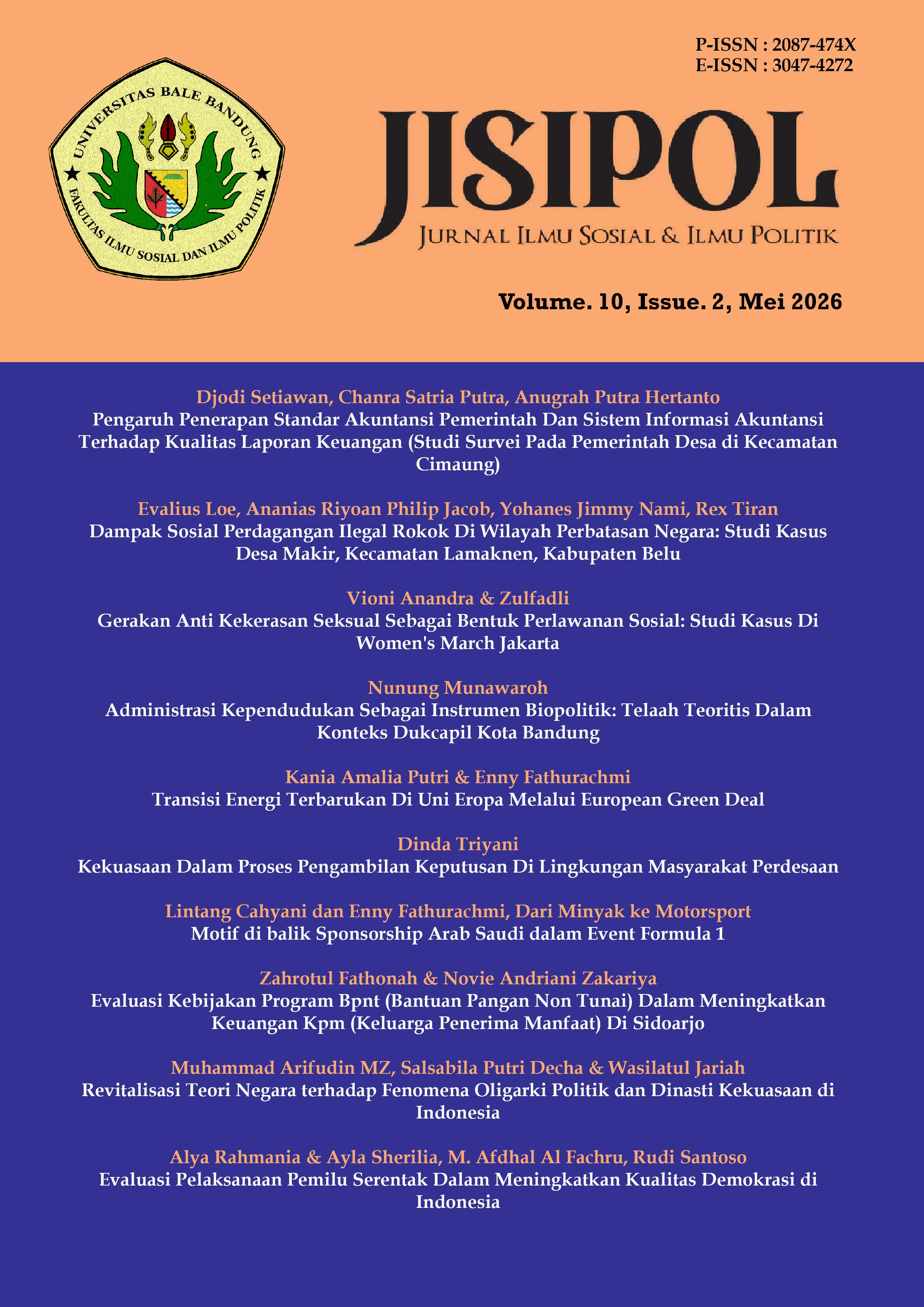
EVALUATION OF THE BPNT (NON-CASH FOOD ASSISTANCE) PROGRAM POLICY IN IMPROVING THE FINANCIAL WELL-BEING OF BENEFICIARY FAMILIES IN SIDOARJO
Keywords:
Policy Evaluation, BPNT, KPM Finance, SidoarjoAbstract
Poverty remains a challenge in Indonesia, including in Sidoarjo Regency. In March 2024, the percentage of poor people was recorded at 4.53% or 109,390 people with a poverty line of Rp597,284 per capita per month. The government distributes the Non-Cash Food Assistance Program (BPNT) or the Basic Food Program as a strategy to maintain the food security of Beneficiary Families (KPM). This study aims to evaluate the effectiveness of the BPNT policy in improving the welfare and financial management of KPM households in Sidoarjo Regency. The study uses a qualitative policy research approach with interview, observation, and documentation techniques. The results show that BPNT can reduce food expenditure burdens and provide space for KPM to meet non-food needs and improve basic financial literacy. However, the effectiveness of the program is still hampered by the accuracy of the Integrated Social Welfare Data (DTKS), delays in distribution, and the suboptimal financial empowerment of recipients. In conclusion, BPNT contributes positively to the food and financial security of poor households, but its impact is still short-term
Downloads
Published
Issue
Section
License
Copyright (c) 2026 Zahrotul Fathonah, Novie Andriani Zakariya

This work is licensed under a Creative Commons Attribution-ShareAlike 4.0 International License.