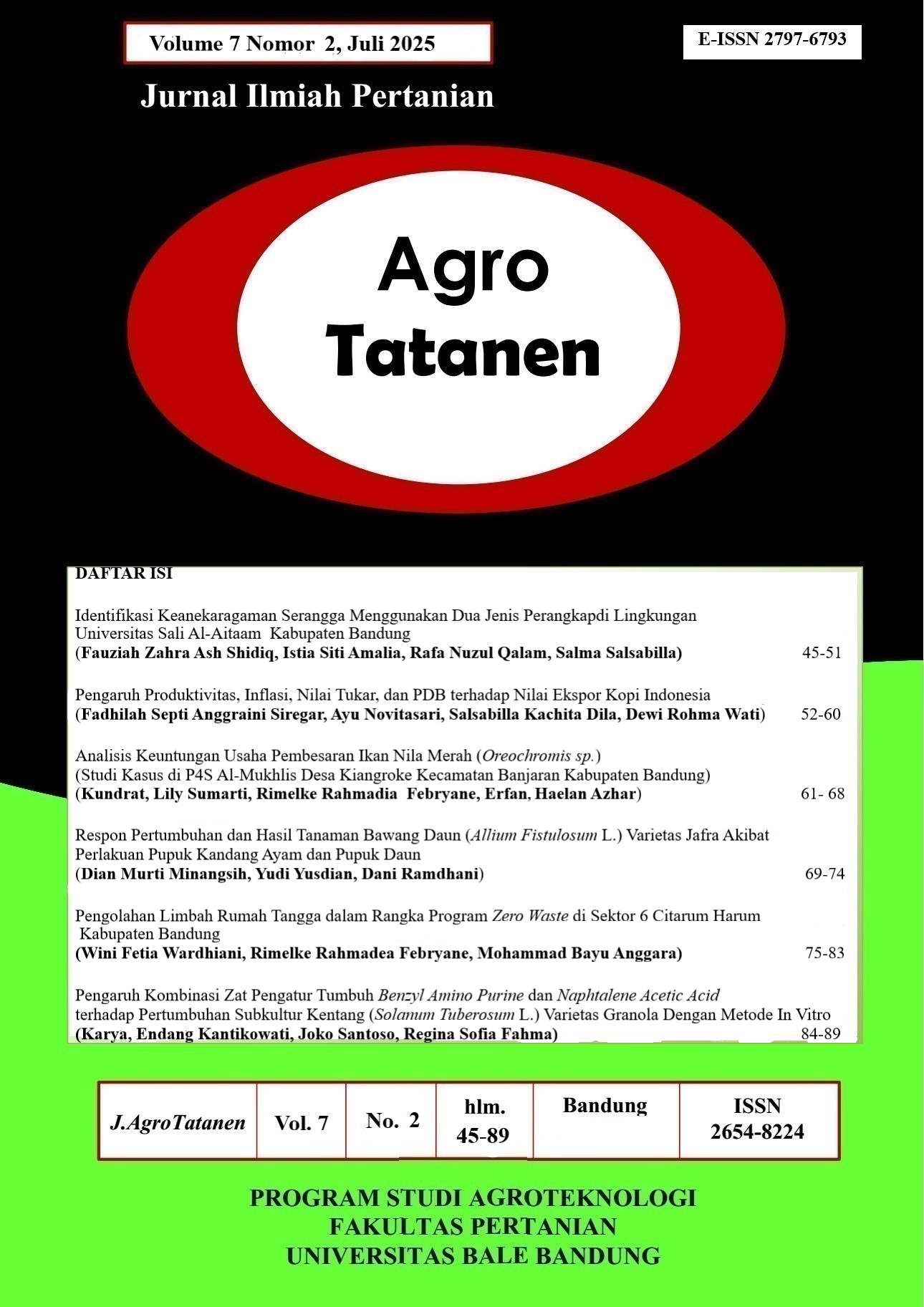
PENGARUH PRODUKTIVITAS, INFLASI, NILAI TUKAR, DAN PDB TERHADAP NILAI EKSPOR KOPI INDONESIA
DOI:
https://doi.org/10.55222/ak94ce12Keywords:
Coffee Exports, Inflation, Exchange Rates, GDP, ProductivityAbstract
Indonesia is one of the world's largest coffee producers with plantations in several provinces in Sumatra, Java and Sulawesi. The coffee sector is a leading export commodity to support the economy, but is influenced by macroeconomic factors such as productivity, inflation, exchange rates, and GDP that affect global competitiveness. This study aims to analyze the effect of productivity, inflation, exchange rates, and Gross Domestic Product (GDP) on the value of Indonesian coffee exports. The data used is secondary data from the period 2000 to 2023, sourced from the Central Statistics Agency (BPS), Bank Indonesia, the Ministry of Agriculture, and the Ministry of Trade. The analysis method uses a quantitative approach with multiple linear regression models. The results showed that productivity and exchange rate had a significant negative effect on the value of coffee exports but inflation and GDP had a significant positive effect. The coefficient of determination of 90.7% indicates that the four independent variables together affect the value of coffee exports. This study provides a deeper understanding of the influence of factors on Indonesia's coffee export performance, which can be the basis for policy recommendations to improve coffee competitiveness in the international market.
References
Aghion, P., Bacchetta, P., Ranciere, R., & Rogoff, K. (2006). Exchange Rate Volatility and Productivity Growth (12117, Vol. 13, Issue Ii).
Boedino. (2001). Ekonomi Makro (4th ed.). BPFE Yogyakarta.
BPS. (2024). STATISTIK KOPI INDONESIA Indonesian Coffee Statistics 2023 ( dan P. Direktorat Statistik Tanaman Pangan, Hortikultura (ed.); Vol. 8). Badan Pusat Statistik.
Desnky, R., Syaparuddin, S., & Aminah, S. (2018). Ekspor kopi Indonesia dan faktor-faktor yang memengaruhinya. E-Journal Perdagangan Industri Dan Moneter, 6(1), 23–34. https://doi.org/10.22437/pim.v6i1.4656.
Ginting, A. M. (2013). Pengaruh nilai tukar terhadap ekspor Indonesia. Buletin Ilmiah Litbang Perdagangan, 7(1), 1–18.
Gozali, I. (2016). Aplikasi analisis multivariat dengan program IBM SPSS 23 (Cet. VIII). Universitas Diponegoro.
Hidayat, Susilastuti, D., & Karno, K. (2022). Pengaruh Produktivitas Perkebunan Karet Terhadap Ekspor Komoditas Karet Di Provinsi Kalimantan Barat. JABE (Journal of Applied Business and Economic), 8(3), 278–289. https://doi.org/10.30998/jabe.v8i3.11977.
Ibrahim, L. (2022). Analisis Hubungan Produksi, Harga Ekspor, dan Kurs terhadap Ekspor Kopi Indonesia (Skripsi). Jurusan Ilmu Ekonomi, Fakultas Ekonomi dan Bisnis Islam, Universitas Islam Negeri Alauddin Makassar.
Imsar, Nurhayati, & Harahap, I. (2023). Analysis of Digital Education Interactions, Education Openness, Islamic Human Development Index ( I-HDI ) and Indonesia's GDE Growth. Edukasi Islami: Jurnal Pendidikan Islam, 12(01), 753–772. https://doi.org/10.30868/ei.v12i01.4265.
Indonesia, B. (2024). Inflasi.
Indonesia, K. P. R. (2017). Peluang Usaha IKM Kopi.
Kuncoro, M. (1997). Keuangan Internasional, Pengantar Ekonomi Bisnis dan Global. Yogyakarta: BPFE.
Pertanian, K. (2024). Tren 2025: Peluang dan Daya Saing Kopi Indonesia. Balai Perakitan Dan Pengujian Tanaman Industri dan Penyegar. https://tanamanindustri.bsip.pertanian.go.id/berita/tren-2025-peluang-dan-daya-saing-kopi-indonesia.
Philippe, B., & Van Wincoop, E. (2000). Does Exchange Rate Stability Improve Trade and Welfare? (6704).
Porter, E, M. (1990). The Competitive Advantage of Nations (pp. 72–91). Harvard Business Review.
Pramanta, K. D. A., dkk. (2017). Faktor-Faktor yang Memengaruhi Ekspor Ikan Tuna Indonesia Periode 1994-2015. E-Jurnal EP Unud, 6(12), 2408-2435.
Priyono, A. (2019). Pengaruh PDB, Nilai Tukar, Inflasi terhadap Ekspor Karet Indonesia Periode 2007-2013. Jurnal Ilmu Dan Riset Manajemen, 8(4), 1–15.
Ratana, S. D., Achsani, A. N., & Andati, T. (2012). Dampak Perubahan Nilai Tukar Mata Uang Terhadap Ekspor Indonesia. Jurnal Manajemen & Agribisnis, 9(3), 154–162.
Rosadi, D., & Sigit, S. (2012). Ekonometrika & analisis runtun waktu terapan dengan Eviews. Andi.
Saragih, B., Rahmawati, M., Ismanto, A., & Saragih, F. M. (2022). Profile of FTIR (Fourier Transform Infrared) and Comparison of Antioxidant Activity of Coffee with Tiwai ( Eleutherine americana Merr). Proceedings of the 6th International Conference of Food, Agriculture, and Natural Resource (IC-FANRES 2021), 16, 27–31. https://doi.org/10.2991/absr.k.220101.005.
Soekartawi. (2007). E-AGRIBISNIS: TEORI DAN APLIKASINYA. In Seminar Nasional Aplikasi Teknologi Informasi.
Umam, F. (2016). Analisis Pengaruh Harga Kopi Dunia, Produktivitas Perkebunan, Kurs Nilai Tukar, Dan Harga Kopi Domestik Terhadap Volume Ekspor Kopi Amsterdam Kabupaten Malang [Universitas Brawijaya]. http://repository.ub.ac.id/id/eprint/108996.
Downloads
Published
Data Availability Statement
The data generated and/or analyzed during this study are available from the corresponding author upon reasonable request.